
Coordinated product flow
Treat conveyor speed, gaps, accumulation and robot availability as one sequence rather than separate machines.
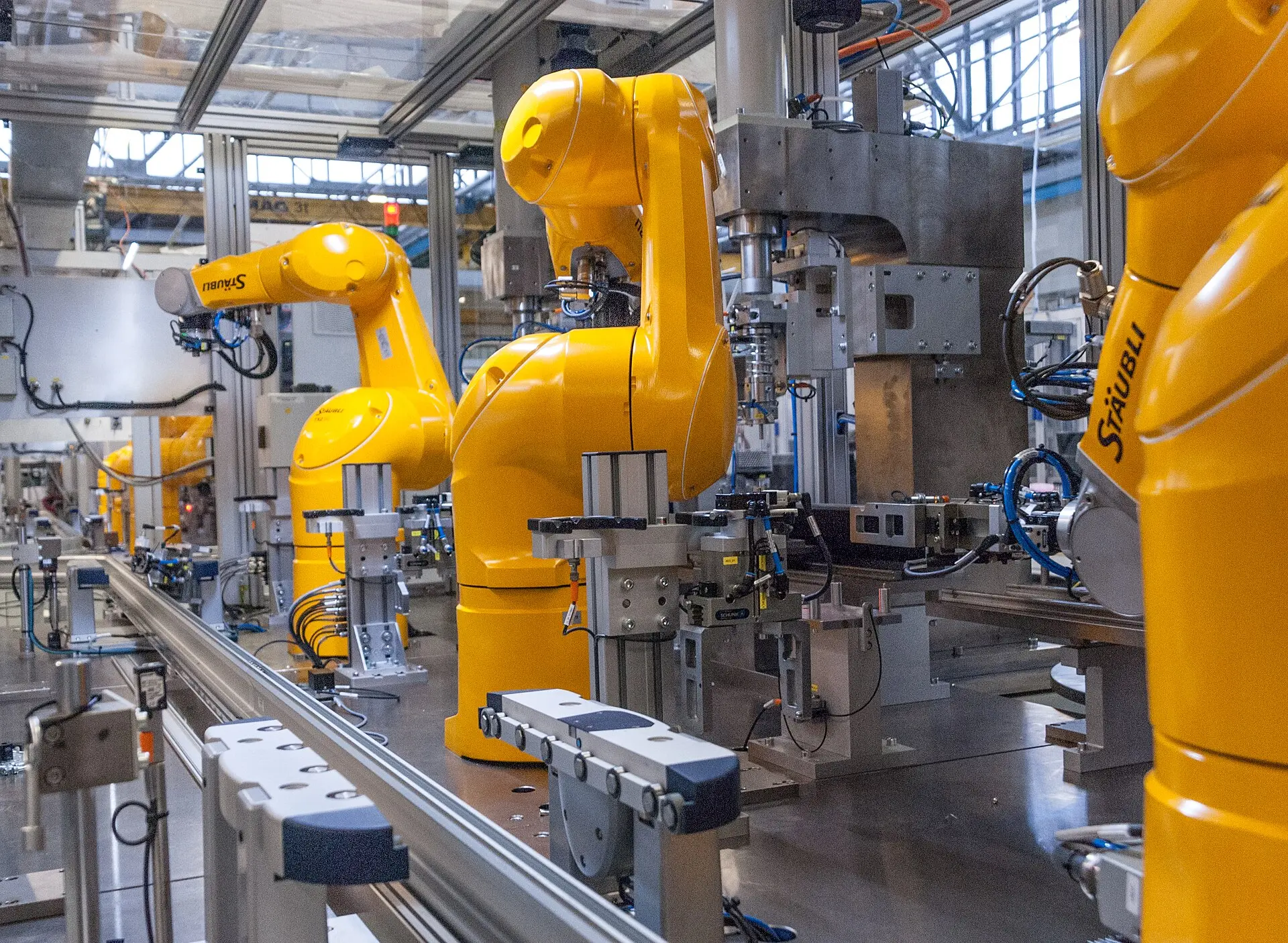
Integrate robots with indexed or continuously moving conveyors, accumulation, product detection and upstream or downstream equipment as one controlled material-flow system.
The strongest projects start with a clear operating problem, measurable output requirement and defined product route.
Products arrive continuously or at variable spacing
The robot must pick from or place onto a moving belt
Accumulation is needed between unequal process rates
Product position and identity must remain known through transfer
The robot is one element. Success is measured by controlled movement, usable production flow and practical operation.
Treat conveyor speed, gaps, accumulation and robot availability as one sequence rather than separate machines.
Use encoder tracking, detection and calibrated coordinates where the application requires conveyor tracking.
Define restart, clearing and fault behaviour so operators can return the line to a known state.
We define the equipment and interfaces needed to move from a robot demonstration to a production-capable cell.
Belt, roller, modular, timing, cleated or fixture conveyor selected for the product.
Sensors, encoders, vision and product-coordinate management.
Buffer length and control zones matched to real line behaviour.
Pick windows, place positions, missed-product handling and priority logic.
Upstream/downstream ready, blocked, starved, fault and safety signals.
Minimum and variable gaps determine detection, tracking and achievable pick windows.
Belt slip, product movement and mechanical tolerances affect the pickup position available to the robot.
Accumulation should be sized from actual stop durations and rates, not used as a substitute for line balancing.
Materials, guarding and conveyor design should reflect hygiene, dust, fluids or temperature conditions.
Final answers depend on your product, rate, layout and surrounding equipment.
Yes, for suitable products and speeds. Encoder-based conveyor tracking and sometimes vision allow the robot to follow a moving pickup position within a defined window.
Conveyors, sensors, accumulation and line controls can be included within the complete integration scope, subject to the agreed project boundary.
Yes. Routing logic can distribute products by recipe, inspection result, lane availability or production demand where the wider control system provides the required information.
Send the product, weight, pickup and placement details, target output and a photo or video of the current process. We will define the next technical step.