
Connected process flow
Coordinate robot motion with machine states, conveyors, inspection results and downstream availability.
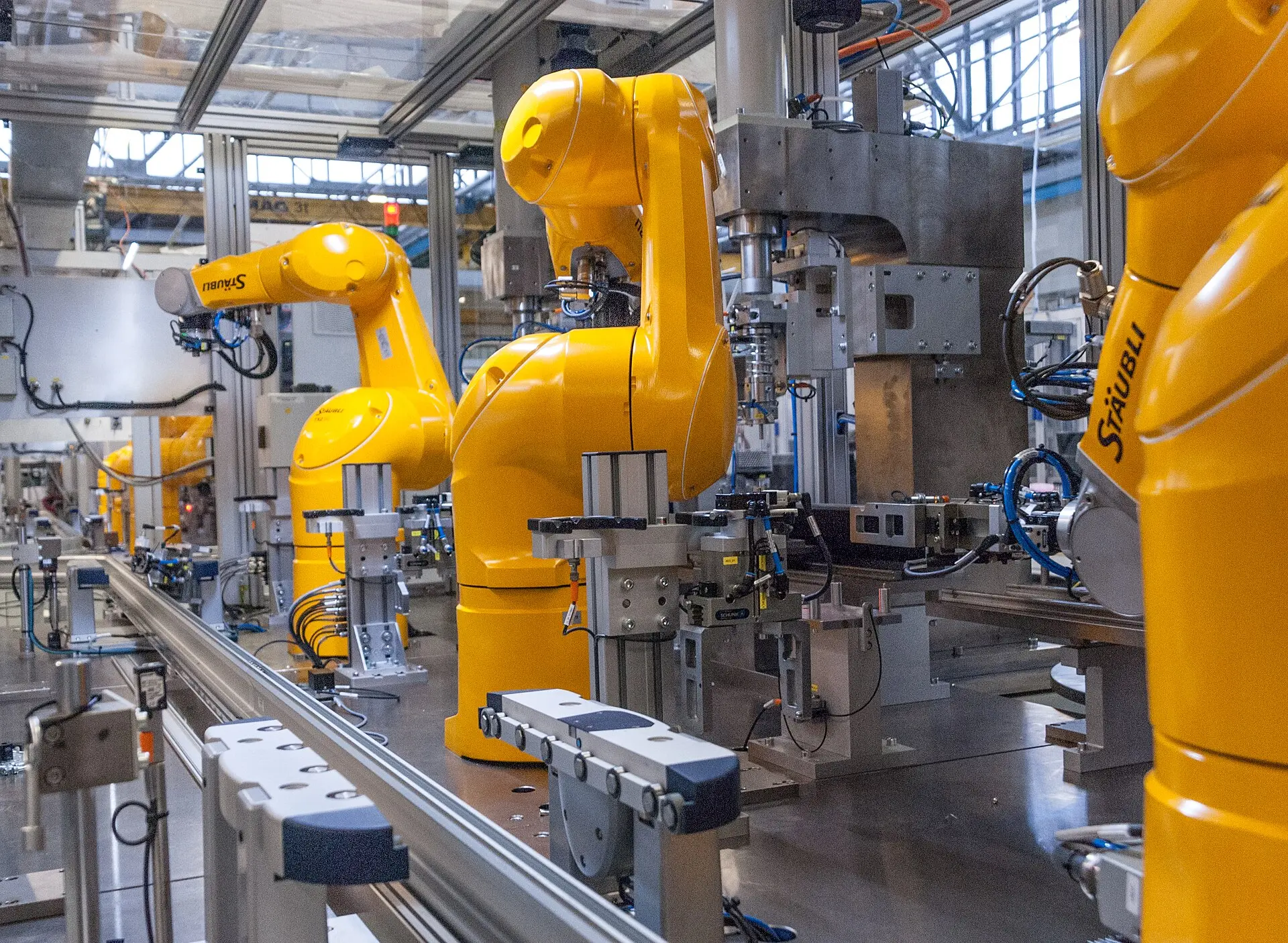
Connect machines and process stages with controlled robotic transfer, preserving orientation, part condition and production sequence from pickup to placement.
The strongest projects start with a clear operating problem, measurable output requirement and defined product route.
Components move repeatedly between fixed production stages
Orientation must be maintained or changed between processes
Manual transfer creates variable cycle time or handling damage
Several machines need coordinated buffering and flow control
The robot is one element. Success is measured by controlled movement, usable production flow and practical operation.
Coordinate robot motion with machine states, conveyors, inspection results and downstream availability.
Control how each part is picked, rotated and presented to the next fixture or process.
Use buffers and clear control rules to prevent one stopped process from immediately stopping the whole line.
We define the equipment and interfaces needed to move from a robot demonstration to a production-capable cell.
Position tolerance, part presence, orientation and release conditions.
Reach, collision zones, shared spaces and cycle-time modelling.
Nests, indexing tables, conveyors or racks sized around upstream and downstream behaviour.
PLC handshakes, recipes, tracking, interlocks and fault diagnostics.
Pass, fail, rework and sample paths incorporated into material flow.
The fastest robot path is not useful if a downstream machine or buffer cannot accept the part.
Contact materials, grip force and support points are chosen around cosmetic and dimensional requirements.
Tracking may be needed where product identity or process history must remain linked to each component.
The layout should leave practical access to machines, tooling, sensors and robot dress packs.
Final answers depend on your product, rate, layout and surrounding equipment.
Yes. A cell can coordinate different machines provided their interfaces, access, cycle states and part requirements are defined. The integration scope is confirmed during application review.
The solution can include accumulation, parking positions, controlled line stops or alternative discharge routes. The required behaviour is designed around the process and acceptable buffer capacity.
Yes. Barcode, data matrix, RFID, fixture identity or PLC-based position tracking can be integrated where the production requirement justifies it.
Send the product, weight, pickup and placement details, target output and a photo or video of the current process. We will define the next technical step.