
Every move has a purpose.
Explore complete robotic systems for loading, unloading, transfer, stacking, product movement, conveyor integration and heavy-payload handling.
Define the product,
route and result.
The same robot arm can produce very different outcomes depending on tooling, presentation, surrounding equipment and control logic. Choose the closest application to see the complete system considerations.
 01
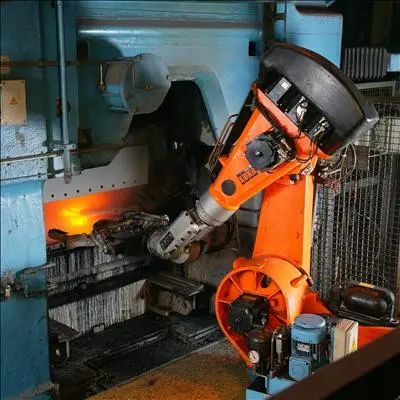
Loading & unloading
Move components into and out of machines, fixtures, conveyors, stillages and process equipment with a cell engineered around access, cycle signals, gripping and safe operator interaction.
Explore system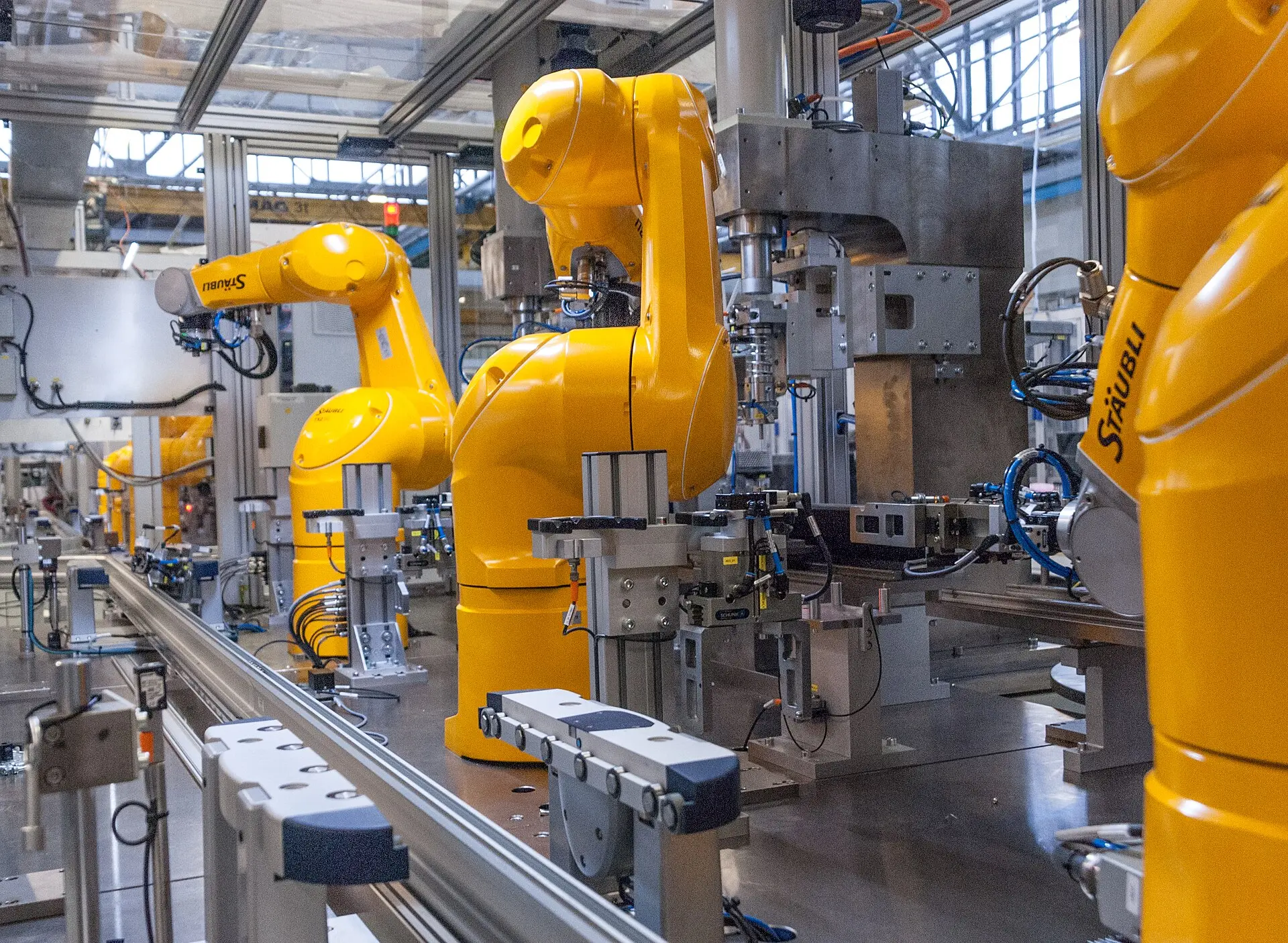 02
Transfer systems
Connect machines and process stages with controlled robotic transfer, preserving orientation, part condition and production sequence from pickup to placement.
Explore system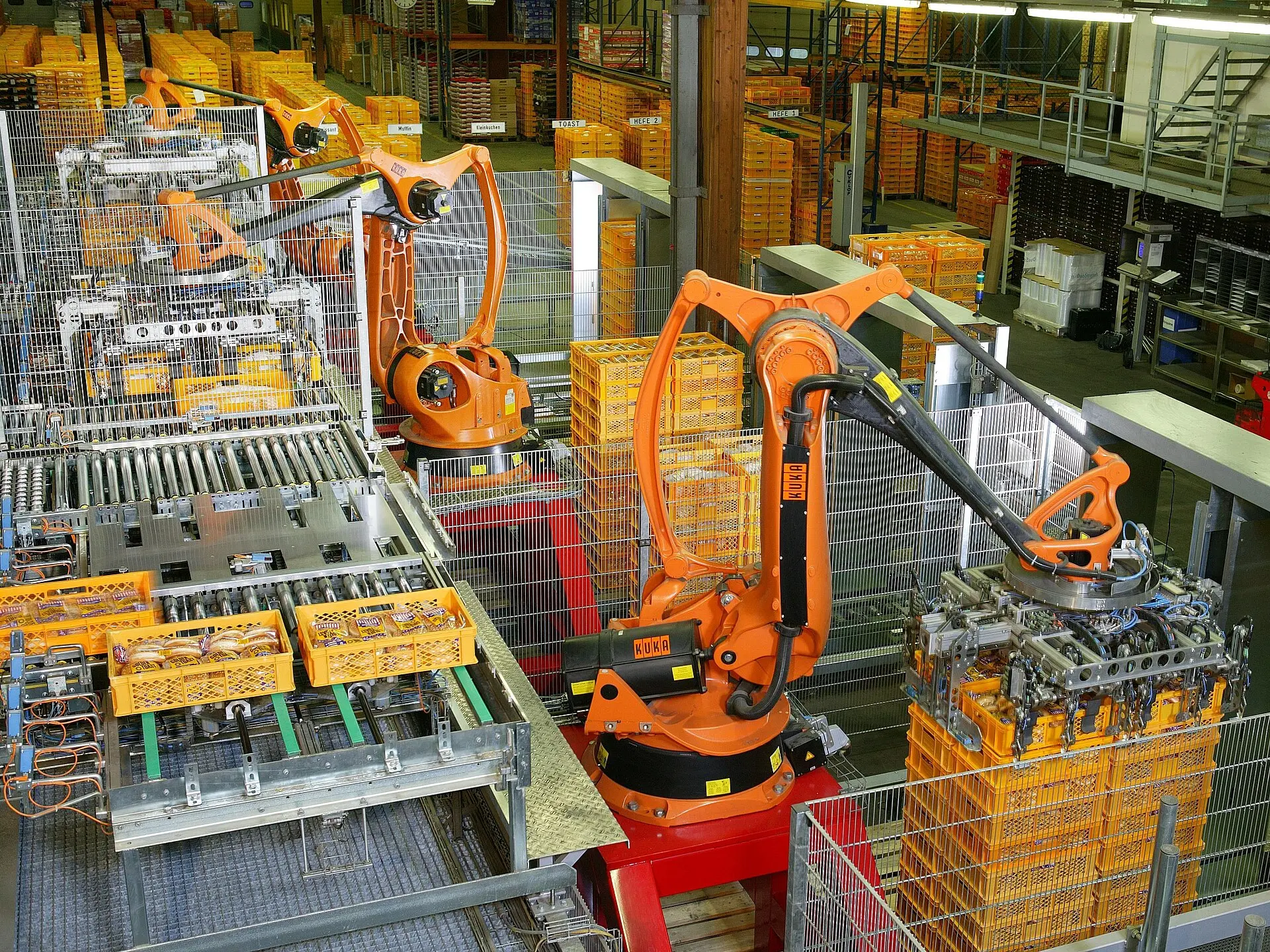 03
Stacking & destacking
Build, separate and transfer repeatable stacks of components, trays, containers, boards and production materials without relying on repetitive manual lifting.
Explore system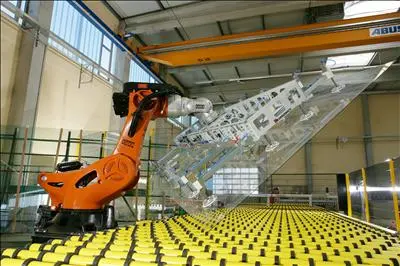 04
Heavy-payload handling
Automate the movement of heavy, bulky or high-inertia parts with the robot, tooling, base structure, safeguarding and motion strategy engineered as one system.
Explore system 05
Product movement
Move, turn, space, buffer and place products between production activities using motion and end-of-arm tooling designed around the item and required presentation.
Explore system06Conveyor integration
Integrate robots with indexed or continuously moving conveyors, accumulation, product detection and upstream or downstream equipment as one controlled material-flow system.
Explore system07End-of-arm tooling
Engineer the gripper around the product, pickup condition, movement and failure modes—because reliable material handling depends on the complete end effector, not the robot arm alone.
Explore system 08
Robotic bin picking
UK robotic bin picking systems using 2D or 3D vision to locate, pick and present randomly arranged components from bins, totes and stillages.
Explore system09Vision-guided handling
Vision-guided robot handling systems for part localisation, orientation, inspection hand-off, conveyor tracking and 2D or 3D robotic guidance.
Explore system 10
Cobot material handling
Collaborative robot material handling systems for repetitive lifting, machine support, transfer and flexible low-volume UK production tasks.
Explore system11Kitting and tray loading
Robotic kitting, component collation and tray-loading systems for line feeding, dunnage loading, buffering and inspection hand-off.
Explore systemChoose the handling route from pickup uncertainty and destination tolerance
Two loads with the same mass may need different systems. Compare the uncertainty at pickup, the condition during movement and the precision required after release before deciding whether a simple transfer, guided pick or more controlled presentation is appropriate.
Fixed pickup: prove the datum and the difficult variant
A repeatable tray or nest can simplify locating the load, but the actual grip surface and permitted position range still matter. Include the smallest contact area, the least rigid product and the position furthest from the robot. Check the complete moving load against the chosen robot’s own load limits, including the tool and its offset.
Random pickup: include the part that cannot be reached
Vision can locate candidates without guaranteeing that the gripper can access every one. Test the bottom corners of bins, overlapping parts and permitted surface variation. Define how the system handles no-pick conditions and how the operator replenishes or rearranges material. Compare that work with the cost of more controlled presentation.
Stacking: design both the first and final layer
Include support flatness, stack lean, product compression and separator handling where relevant. State how the destination height or stack position is established. Prove release without dragging or disturbing the previous item. For destacking, include adhesion between layers and a check against carrying two items when that condition is possible.
Transfer: define the receiving process’s acceptance
A receiving fixture may require a particular orientation, datum and unobstructed access. Confirm the destination is ready and specify the accepted state after placement. If a failed placement remains in the fixture, a second attempted load can create a different problem; define recovery before repeating the cycle.
Compare alternatives on useful completed moves
Record accepted placements, interventions, product marking and recovery time under the agreed production pattern. Do not compare isolated robot motion times with an alternative’s complete cycle. Use tooling guidance, bin picking and stacking guidance to investigate the limiting part of the route.
Show us what needs to move.
Send the product, weight, pickup and placement details, target output and a photo or video of the current process. We will define the next technical step.