

Present
Conveyor, tray, stillage, pallet, rack or vision-guided pickup.
Complete robotic systems for loading, unloading, transfer, stacking, product movement and heavy-payload handling—engineered around your real process.
Start with the product, pickup, destination and target output. We define the robot architecture, end effector, presentation, controls and safety measures around that requirement.
 01
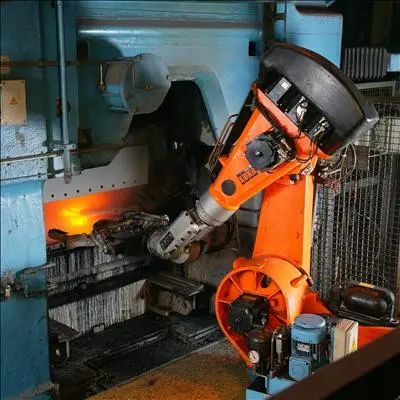
Move components into and out of machines, fixtures, conveyors, stillages and process equipment with a cell engineered around access, cycle signals, gripping and safe operator interaction.
Explore system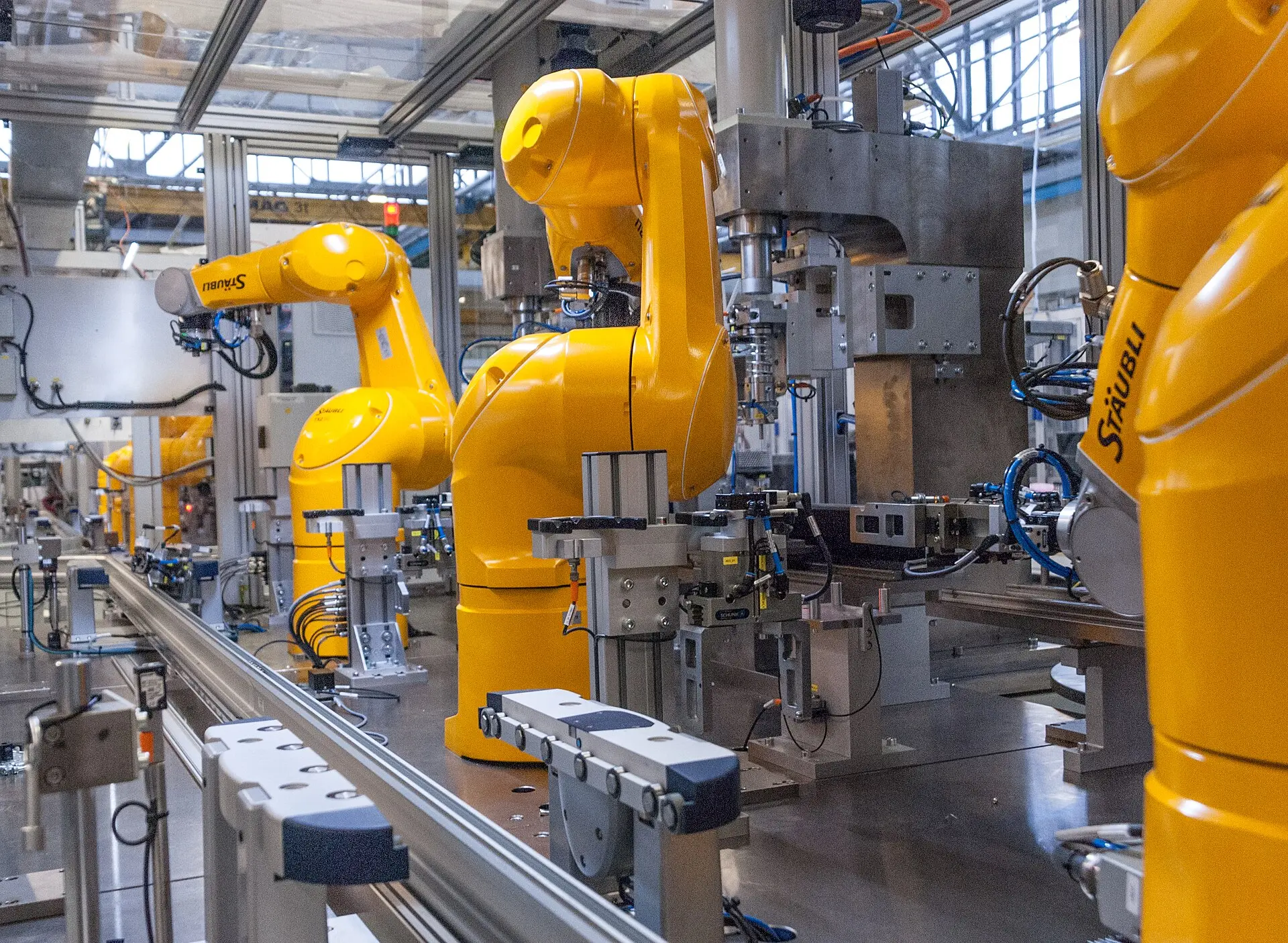 02
Connect machines and process stages with controlled robotic transfer, preserving orientation, part condition and production sequence from pickup to placement.
Explore system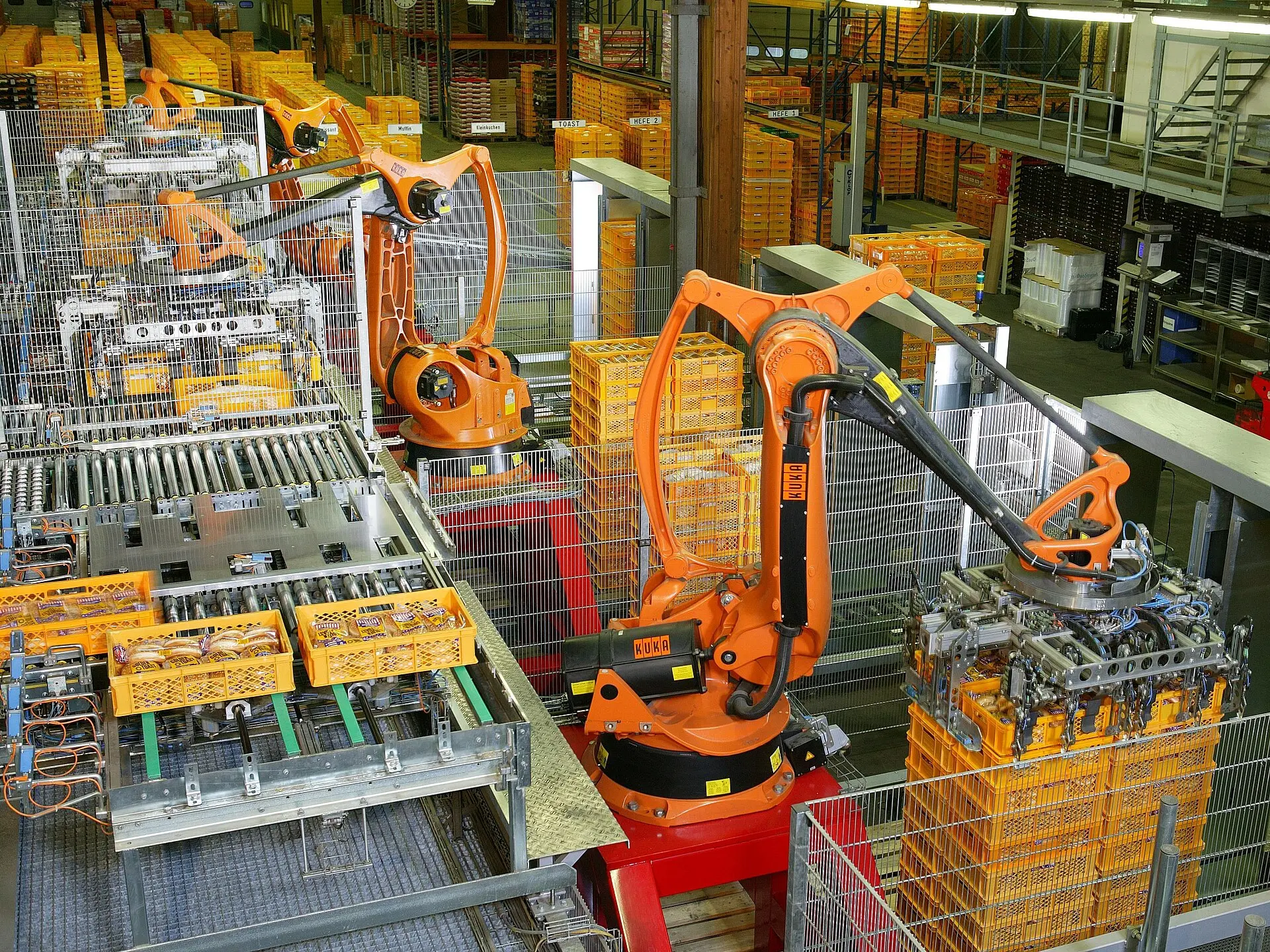 03
Build, separate and transfer repeatable stacks of components, trays, containers, boards and production materials without relying on repetitive manual lifting.
Explore system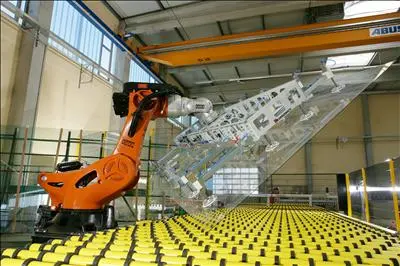 04
Automate the movement of heavy, bulky or high-inertia parts with the robot, tooling, base structure, safeguarding and motion strategy engineered as one system.
Explore system 05
Move, turn, space, buffer and place products between production activities using motion and end-of-arm tooling designed around the item and required presentation.
Explore system06Integrate robots with indexed or continuously moving conveyors, accumulation, product detection and upstream or downstream equipment as one controlled material-flow system.
Explore systemReliable handling comes from treating pickup, tooling, motion, controls and placement as one production system.
Conveyor, tray, stillage, pallet, rack or vision-guided pickup.
Product presence, identity, position, orientation and destination readiness.
Vacuum, mechanical, magnetic, fork or hybrid end-of-arm tooling.
Robot path, speed, acceleration, clearances and coordinated machine signals.
Fixture, machine, stack, conveyor, inspection point or downstream process.
Robot sizing must include end-effector mass, adapters, services, centre of gravity, moments, acceleration and the full working envelope. Headline payload alone is not a specification.
Select the closest starting point. This is an early architecture guide—not a substitute for a full application review.
Best where access, speed and dexterity matter more than raw payload.
A broad range for machine service, transfer and structured stacking.
Built around centre of gravity, moments, structure and retained-load safety.
Useful where products share handling features but require recipe-led movement.
A fast robot does not create a productive line if parts arrive inconsistently, the destination is blocked or operators cannot recover the process. We map the complete route and define how each hand-off behaves.
These platforms illustrate the range available for material-handling projects. Final selection is confirmed against your moving payload, reach, cycle, environment and safety requirements.
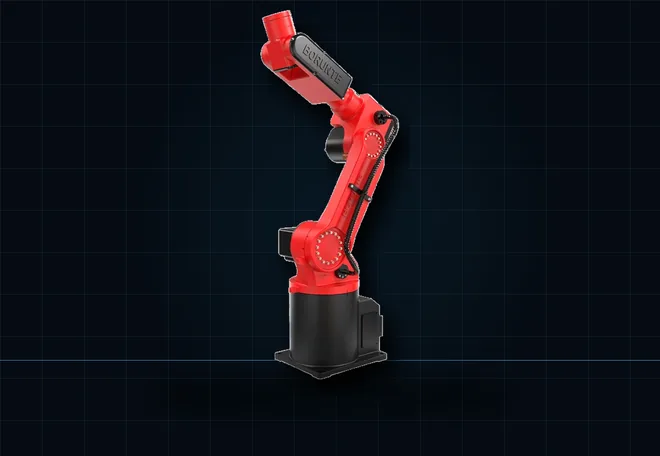 Compact six-axis
Small-part transfer, compact machine service and fast positioning.
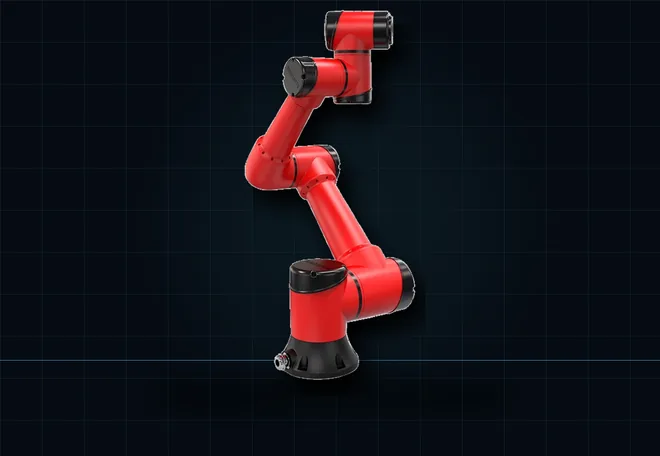 Collaborative robot
Light handling, packaging, assembly support and suitable operator-adjacent tasks.
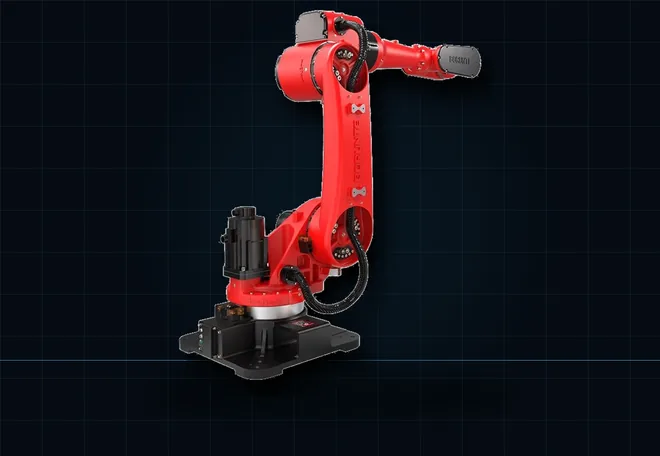 General industrial
Production-line handling, machine tending, loading, unloading and component transfer.
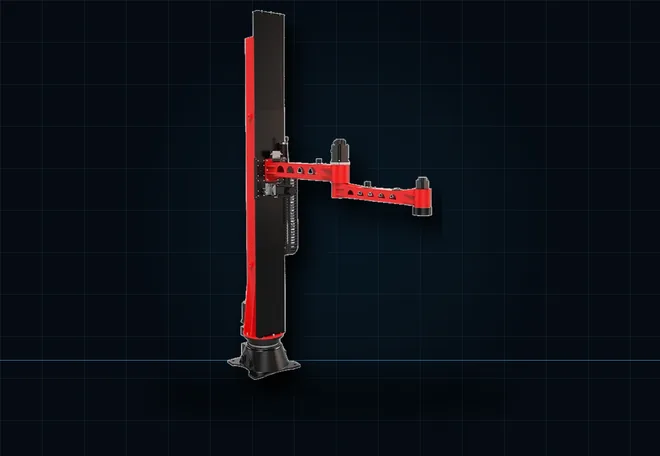 Long-reach handling
High-layer stacking, handling, loading, unloading and raw-material feeding.
Part condition, hygiene, environment, rate and the surrounding process shape every cell. We adapt the integration around the industry and application.
Castings, fabrications, assemblies, panels, wheels, fixtures and inter-process movement.
Blanks, machined parts, pressings, sheet, castings and hot or sharp components.
Moulded parts, inserts, trays, containers, sprues and downstream product transfer.
Suitable packaged or contained products, trays, cases and end-of-line movement.
Boards, panels, blocks, components, bags and other repetitive heavy handling.
Totes, cartons, containers, order movement and interface with conveyor systems.
A clear delivery route keeps the application, controls, safety and acceptance criteria aligned.
Product, load, rate, formats, current method, layout and operator needs.
Robot, end effector, presentation, controls, safety and cell layout.
Build, program, dry test, product trial and close issues before deployment.
Install, commission, train, accept and plan support for production handover.
These are common starting points for UK manufacturers assessing robotic material handling.
A robotic bin-picking system combines suitable 2D or 3D vision, grasp planning and a product-specific gripper to locate and extract parts from bins, totes or stillages.
Cobot material handling can fit compact, flexible or operator-adjacent tasks when payload, reach, target rate and the application risk assessment support collaborative operation.
The right robot gripper or end-of-arm tool may use vacuum, magnetic or mechanical gripping. Surface, porosity, load, acceleration and the safe state during utility loss determine the choice.
Vision-guided robot handling can combine product detection, calibrated cameras and conveyor encoder data so the robot predicts and follows the pickup position.
Yes. A robotic kitting and tray-loading cell can identify, count, orient and place components, subject to the required assurance, product range and cycle time.
Every final system is application-specific, but these answers explain the decisions that shape most projects.
It is a complete automation cell that moves products or components between defined positions or processes. The system normally combines a robot or cobot, end-of-arm tooling, sensing, controls, safety measures and interfaces to surrounding equipment.
Typical tasks include loading, unloading, station-to-station transfer, stacking, destacking, reorientation, conveyor picking, buffering, sorting by destination and movement of heavy or awkward components.
We start with the complete application: product and tooling mass, centre of gravity, reach, access, motion, rate, environment, interfaces and safety. Robot selection follows from those requirements rather than headline payload alone.
Yes, subject to an interface review. We define mechanical access, electrical and safety signals, control ownership, product hand-off and fault recovery before confirming the project scope.
Cobots can suit some lighter, lower-speed or flexible tasks, but collaborative operation is determined by the complete application and risk assessment. A cobot arm does not make every cell automatically safe without guarding.
Send product dimensions and weight, pickup and placement details, target rate, current-process photos or video, available layout, operating environment, product variants and information about upstream or downstream equipment.
Send the product, weight, pickup and placement details, target output and a photo or video of the current process. We will define the next technical step.
A successful pickup is one part of material handling. The proposal also needs to show how the load stays controlled during movement, how it is released and how the surrounding process continues.
Include the product, gripper, adapter and services in the load review. Show permitted grip surfaces, normal position variation and any condition that changes the item’s shape or stability. Use the end-of-arm tooling guide to define retention, sensing and release together.
For loading and unloading, identify the machine-ready, part-present and completed-transfer conditions. Establish what the robot should do when the source is empty, the fixture is occupied or the receiving process cannot continue.
An occasional upstream gap or downstream stop can determine the required accumulation and recovery behaviour. Assess the arrival pattern and destination availability over a normal shift pattern instead of assuming an uninterrupted series of identical picks.
Evaluate the final datum, orientation and acceptable marking after release. For stacking and destacking, include the first and last layers and any variation in the container or support surface.
Include replenishment, empty-container removal, tool changes and recovery in the concept. The cell integration review should allocate access, controls, safeguarding and acceptance responsibilities before a robot platform is selected.
Read the material-handling application comparison for fixed versus random pickup, difficult stack layers and accepted placement conditions.