
Product and load
Dimensions, mass, centre of gravity, surface, temperature, condition, permitted contact areas and variation.
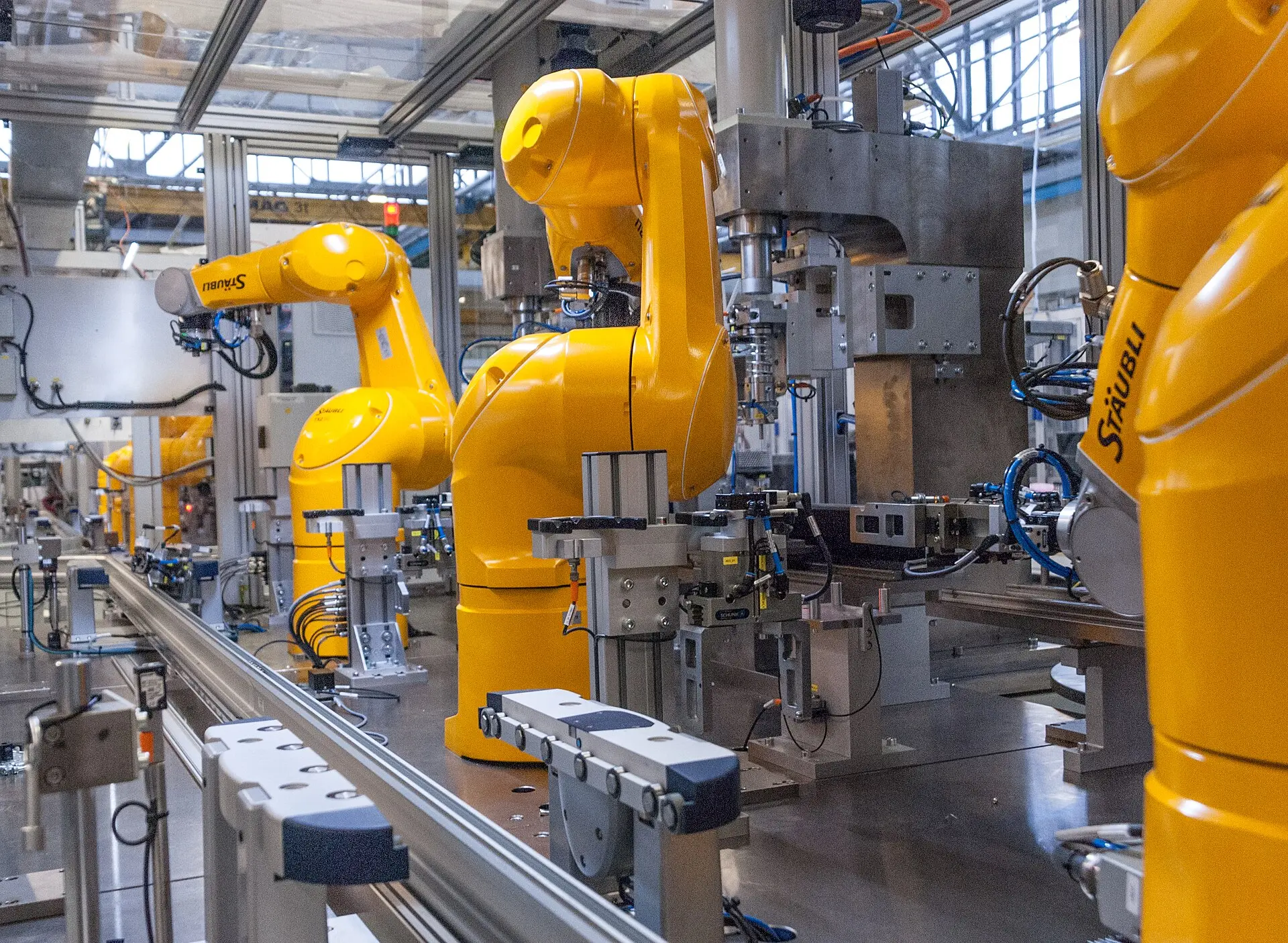
A useful robot specification starts with the product, route and production result—not a preferred arm. Use this guide to prepare the evidence an integrator needs to assess feasibility, architecture and project scope.
Each input changes the robot, tooling, layout, controls or safety concept. Missing information should become an explicit assumption or test—not an invisible risk.
Dimensions, mass, centre of gravity, surface, temperature, condition, permitted contact areas and variation.
Fixture, tray, stillage, pallet, conveyor, feeder or random container, including positional tolerance.
Required position, orientation, placement tolerance, release confirmation and destination readiness.
Target cycle, shift pattern, batch size, replenishment interval, changeover and acceptable recovery time.
Reach, access openings, obstacles, floor space, height, maintenance access and operator routes.
Machine signals, control ownership, utilities, guarding, access, manual tasks and foreseeable hazards.
Products, rates, quality checks, autonomy, fault scenarios, training and evidence required for handover.
The robot carries everything after the mounting flange. Tooling mass and load geometry can remove a nominally suitable robot from consideration.
Include the heaviest approved product and any multi-pick quantity.
Gripper, frame, valves, sensors, adapters, tool changer and carried services.
Check the combined load position for every grip, orientation and product format.
Long, wide or offset loads can exceed wrist limits before nominal payload is reached.
Acceleration, deceleration, path, cycle frequency and emergency behaviour affect sizing.

Drawings, weights, material, finish, variants, samples and acceptable grip locations.
Short video, photos, layout, machine details, current rate and the constraint you want to remove.
Target output, autonomy, quality, changeover, operator involvement and future variants.
Available space, utilities, shutdown windows, upstream and downstream responsibility and site standards.
Final performance depends on the product, presentation, rate, layout and surrounding process.
Start with product dimensions and mass, centre of gravity, permitted contact areas, pickup presentation, destination, required orientation, target rate, variants, layout, environment, upstream and downstream interfaces, operator tasks and acceptance criteria.
Payload includes the product, end-of-arm tooling, adapters, cables and any services carried by the wrist. The centre of gravity, wrist moments, inertia and acceleration must also remain within the selected robot limits throughout the motion.
The complete cycle includes product detection, machine or line signals, gripper movement, grip confirmation, robot travel, placement, release, verification and any waiting for upstream or downstream equipment.
Major drivers include payload and reach, tooling complexity, product presentation, vision, surrounding conveyors or fixtures, safeguarding, controls integration, validation, installation, training and the number of product variants. A useful budget follows a defined scope rather than the arm price alone.
No. Collaborative operation depends on the complete application and risk assessment, including the product, gripper, speed, force, sharp or hot hazards and possible trapping points. Some cobot cells still require guarding or other protective measures.
Send the available product, process, rate and layout information. We will identify the missing evidence and define the next technical step.