
Reliable part detection
Locate selectable components despite overlap, changing bin depth and normal presentation variation.
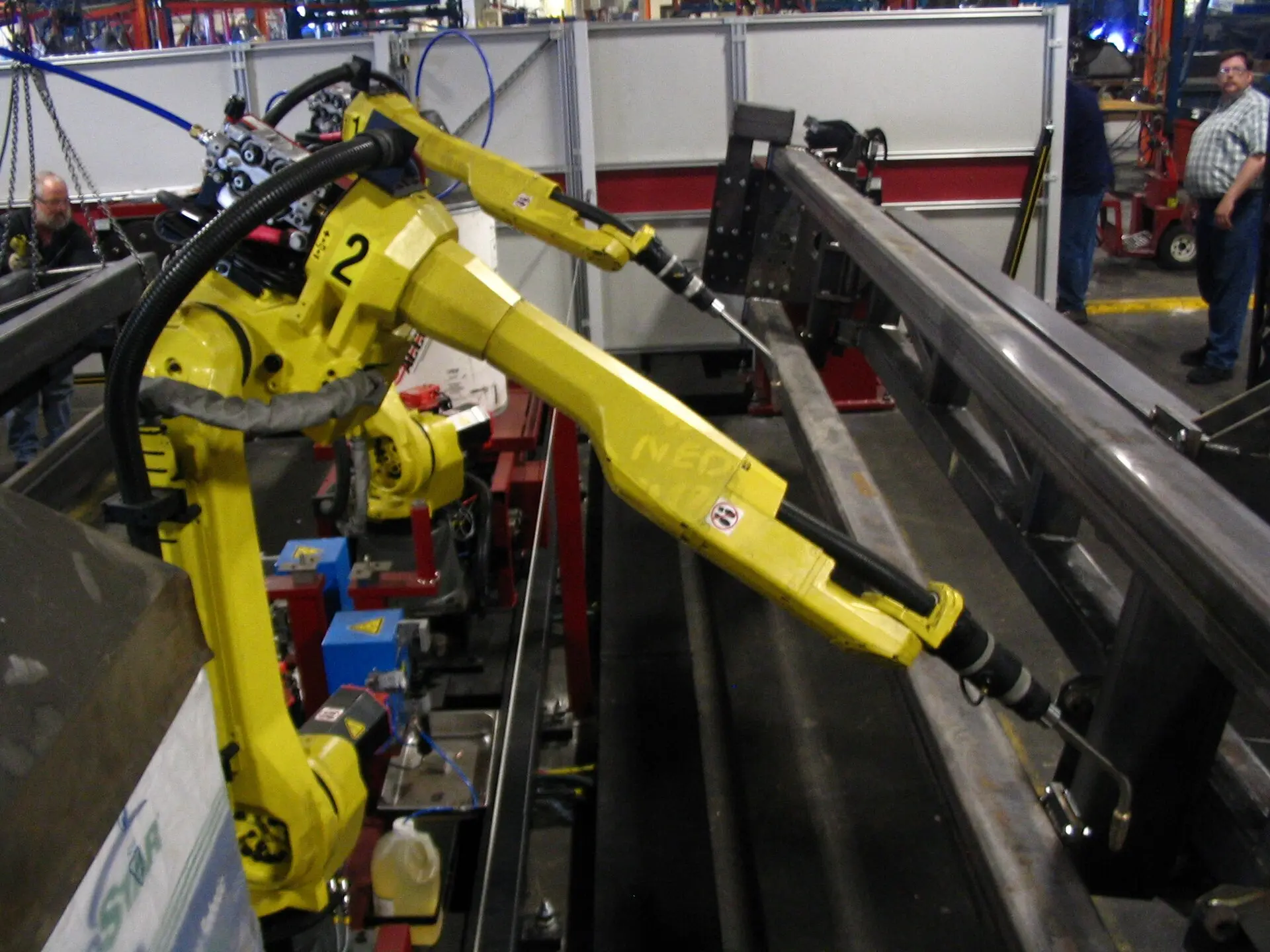
Bin-picking software uses a calibrated 2D image or 3D point cloud to estimate a component pose, select a reachable grip and plan a collision-aware robot path. The complete system also needs suitable lighting, tooling, bin presentation, failed-pick recovery and a defined downstream hand-off.
Representative trials establish whether the parts can be found, gripped and removed reliably under realistic presentation conditions.
Components arrive randomly arranged in bins, totes or stillages
Manual picking restricts machine autonomy or exposes operators to repetitive work
Part pose can be measured with suitable 2D or 3D vision
A defined downstream nest, conveyor or machine hand-off is available
Performance is the sustainable accepted-pick rate across the real part mix and bin condition—not the robot's headline speed.
Locate selectable components despite overlap, changing bin depth and normal presentation variation.
Select an accessible grip, confirm pickup and recover safely after a failed or double pick.
Present the component in the orientation and condition required by the next process.
Vision software is one part of a production system that also depends on optics, tooling, motion, recovery and safe access.
Camera, optics, lighting and calibration selected around the part surface and required pose.
Software ranks reachable components and calculates a collision-aware approach and withdrawal.
Reach, payload, gripper geometry and services matched to the complete moving load.
Defined actions for no-pick, failed grip, obscured parts, empty-bin and downstream faults.
Replenishment, access and operating modes based on the complete cell risk assessment.
Reflective surfaces, tangling, nesting, deformation and contamination affect what the sensor and gripper can achieve.
Wall height, corners, usable depth and replenishment method influence reach and collision risk.
Specify good parts delivered at the hand-off after imaging, path calculation and normal recovery events.
Test representative variants and realistic fill levels, then record successful picks, cycle and failure modes.
Final answers depend on representative parts, presentation, rate and the required hand-off.
Three-dimensional sensing is commonly needed when parts overlap at different heights or the robot must estimate full pose. Flat, well-separated parts may permit a simpler 2D approach.
Possibly, but reflections, occlusion, nesting and entanglement increase application risk. Representative parts and realistic bin conditions must be trialled.
Image acquisition, pose calculation, robot travel, grip verification, failed-pick recovery, bin depth and downstream placement all contribute to sustainable output.
Send part samples or drawings, bin dimensions, presentation photos, the target accepted rate and downstream hand-off. We will define the next technical step.