
Correct component and quantity
Define how the required component and count are established for the approved kit or tray format.
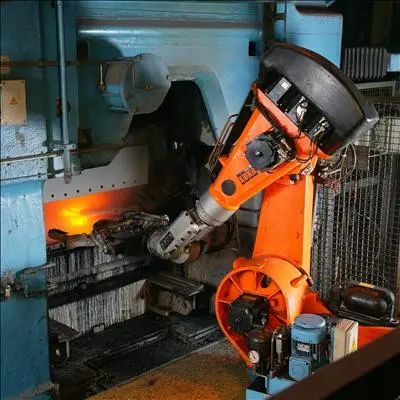
Robotic kitting and tray loading brings components together and places them in the required tray, dunnage or downstream position. A cell can identify, count, orient and place components, subject to the required assurance, product range and cycle time. Specify what a complete, accepted kit or loaded tray must contain before selecting the robot.
The project may feed a line, load dunnage, provide a buffer or hand parts to inspection. Those routes need different destination and assurance requirements, even when the robot performs similar movements.
List the approved component variants and required quantity for each kit
Define the required tray or dunnage position, orientation and product condition
Show pickup presentation, permitted grip surfaces and normal variation
Include replenishment, completed-tray removal and recovery in the output requirement
The acceptance method should establish the required product, quantity and placement result, with evidence appropriate to the application.
Define how the required component and count are established for the approved kit or tray format.
Specify the destination position, orientation, permitted contact and condition after release.
Assess supply, pickup, transfer, placement, replenishment and removal together rather than timing an isolated pick.
Robot selection follows the product family, complete moving load, access, required output and safety review.
Define whether components arrive in fixtures, trays, conveyors or random containers and how normal variation affects pickup.
Review permitted contact surfaces, part and tooling mass, grip confirmation and controlled release.
Where identification or orientation checks are required, define sensing and assurance as part of the complete cell.
Confirm that the receiving tray, dunnage or process is ready and specify the accepted state after placement.
Plan replenishment, product changes, operator access and responses to missed picks or blocked placement, with application-specific safeguarding.
Use representative parts, trays or dunnage and define the product family the cell must handle.
Specify the placement datum, orientation and allowable condition after release; check destination readiness before another placement.
Include detection, gripping, confirmation, travel, placement and normal waiting or recovery in the target cycle.
Agree required product and quantity checks, placement quality, fault scenarios, changeovers, training and handover evidence.
The product range, presentation, destination and required assurance determine the final system.
A robotic kitting and tray-loading cell can identify, count, orient and place components, subject to the required assurance, product range and cycle time. Define the inspection or checking task and the accepted result before confirming the system scope.
Provide product dimensions, mass, surface and permitted contact areas; tray or dunnage details; required position and orientation; pickup presentation; target rate; product variants; layout; and the checks needed to accept a loaded tray.
The cell specification should define the response to a missed pick, occupied destination or interrupted process. Source and destination readiness, recovery, operator access and safeguarding need to be reviewed as part of the complete production route.
Send component details, kit quantities, tray or dunnage drawings or photos, pickup presentation, the target output and the required acceptance checks. We will define the next technical step.