
Known pickup
Use fixtures, feeders, trays, conveyors or vision to give the robot a repeatable target.

A pick and place robot moves a component or product from a known or detected pickup position to a defined destination, with the presentation, gripper, sensing and controls engineered around the complete cycle.
The handling method changes when parts arrive in fixtures, trays, on a moving belt or randomly orientated in a container.
Repetitive component transfer limits output or ties up skilled operators
Products must be sorted, spaced, rotated or placed in a controlled orientation
A conveyor, machine, tray or inspection station needs repeatable loading
Mixed formats require recipe-led motion, adjustable tooling or vision
Reliable automation depends on consistent presentation, verified gripping and a destination that is ready to accept the product.
Use fixtures, feeders, trays, conveyors or vision to give the robot a repeatable target.
Protect the product with the correct contact materials, grip force, acceleration and orientation.
Confirm destination readiness, release state and recovery behaviour before the next cycle.
We integrate the equipment and logic that turn a demonstration pick into a maintainable production system.
Conveyor, tray, fixture, feeder, stillage or vision-guided pickup strategy.
Industrial robot, cobot, SCARA or other motion platform selected from the real duty.
Vacuum, mechanical, magnetic or hybrid gripping with suitable confirmation.
Part position, orientation, identity, presence and destination checks where required.
Machine handshakes, recipes, interlocks, fault recovery and risk-reduction measures.
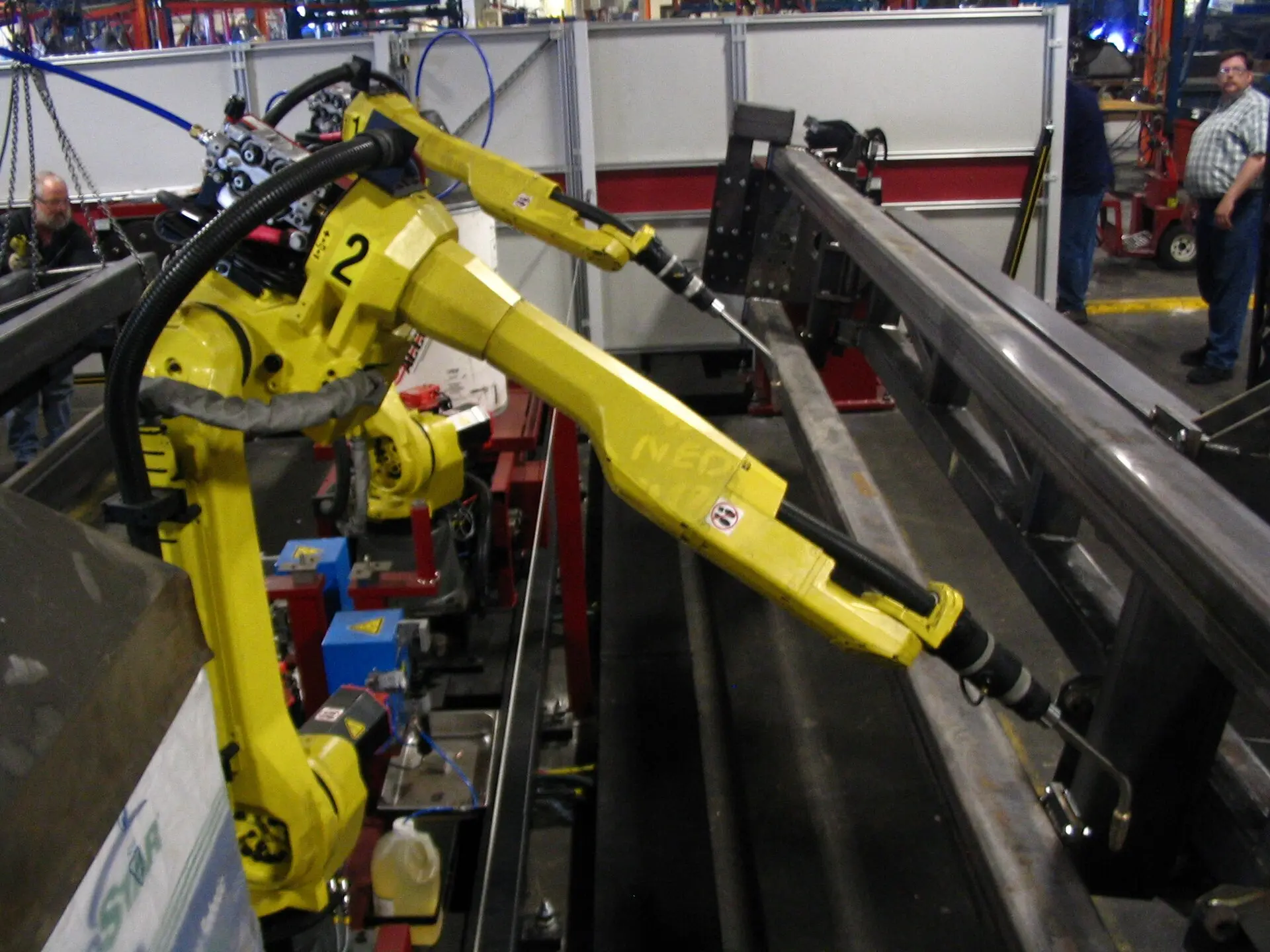
Useful where reach, payload, path flexibility or process access dominate the selection.
May suit flexible or operator-adjacent applications when the complete risk assessment supports the operating concept.
Can suit faster, lighter and more structured picking where the working envelope and orientation requirements allow.
Useful when product position varies, but camera choice, lighting, calibration and exception handling must be proven.
Final performance depends on the product, presentation, rate, layout and surrounding process.
A pick and place robot system identifies or receives a product at one location, grips it, moves it through a controlled path and releases it at a defined destination. A production cell also includes product presentation, end-of-arm tooling, sensors, controls and safety measures.
Yes, when the product and presentation are suitable. Two-dimensional or three-dimensional machine vision can locate parts on a belt, tray or in a container, but achievable reliability must be proven against real product variation, overlap, reflections and occlusion.
The right architecture follows the payload, reach, speed, path, environment, flexibility and risk assessment. Cobots may suit some flexible or operator-adjacent duties, while industrial, SCARA or delta robots can be better for higher speed, reach or payload.
Cycle time depends on travel distance, product settling, vision time, grip confirmation, robot motion, downstream availability and the number of products handled per pick. We model the complete cycle rather than quote robot speed in isolation.
Useful inputs include product samples or drawings, mass and centre of gravity, pickup presentation, required orientation, placement tolerance, target rate, variants, current-process video and available layout.
Presentation, pickup, movement and placement work best when they are designed as one production system.
Send product details, pickup presentation, required placement, target output and a short process video. We will define the next feasibility step.