
Consistent pattern
Place each product at the defined position and orientation while protecting edges, seals and surfaces.
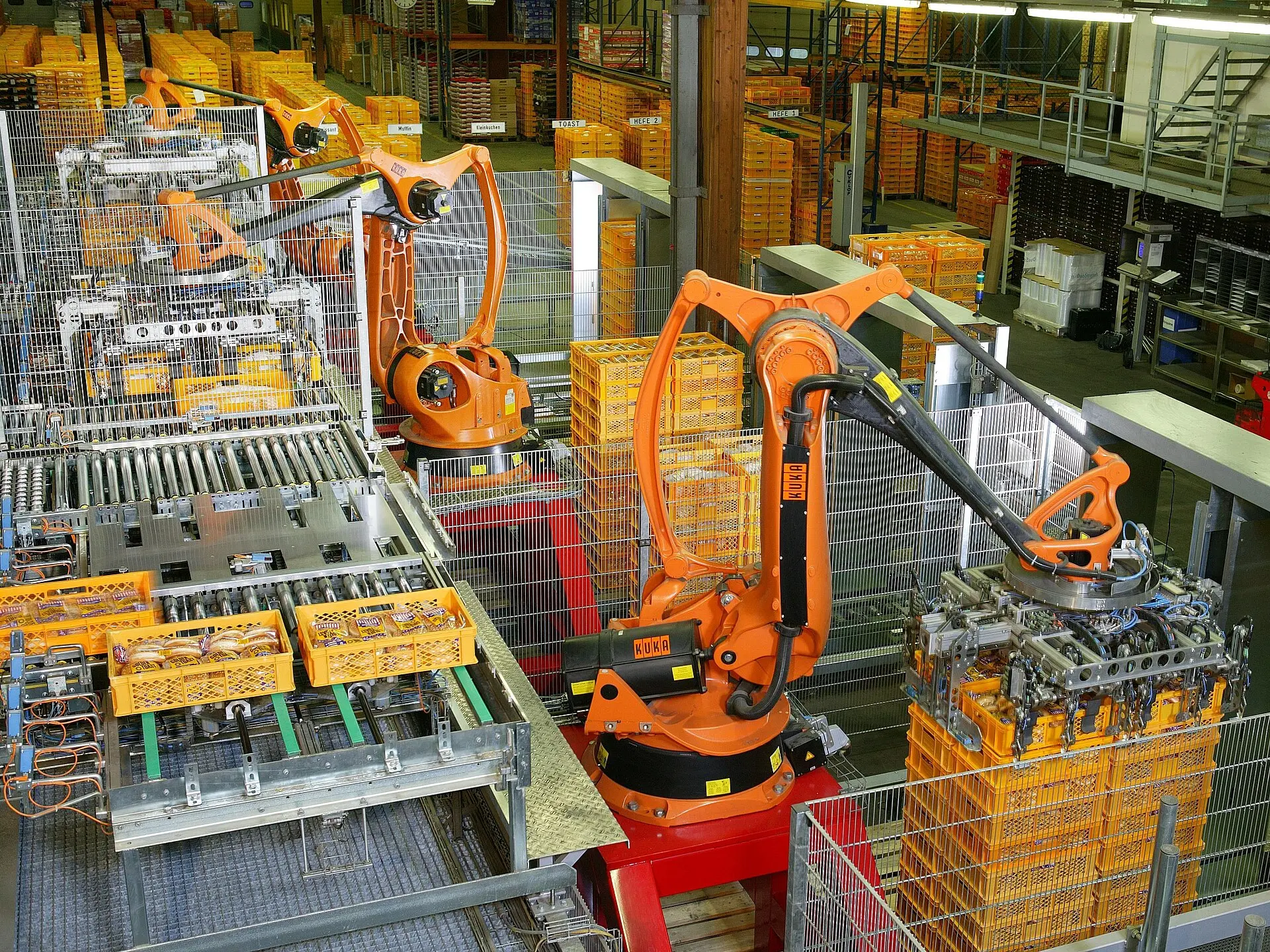
Automate the stacking or removal of cases, trays, sacks, containers, boards and suitable products with the robot, gripper, infeed, pallet handling and controls engineered as one system.
The strongest applications have known products, patterns, rates and pallet logistics, with changeover and recovery considered from the start.
Manual pallet building creates repetitive lifting, inconsistent output or staffing pressure
Several product formats need recipe-controlled patterns or planned changeover
Multiple infeed lines could share one correctly sized robot and pallet area
Palletising must connect with conveying, wrapping, labelling or warehouse movement
Robot speed is only useful when products arrive correctly, pallets are available and the completed load can leave the cell.
Place each product at the defined position and orientation while protecting edges, seals and surfaces.
Manage infeed spacing, orientation, accumulation and line priority before the robot pick.
Coordinate empty pallet supply, completed pallet removal, access and safe recovery.
We define the equipment needed between the production line and a stable, transferable pallet load.
Conveying, spacing, turning, accumulation and confirmation before pickup.
Layer geometry, orientation, overhang rules, stability and product-specific constraints.
Payload, reach, cycle, multi-pick options and contact method calculated together.
Empty pallet magazine, pallet conveyor, truck access or manual exchange concept.
Recipes, product identity, wrapping or labelling interfaces, diagnostics and fault recovery.
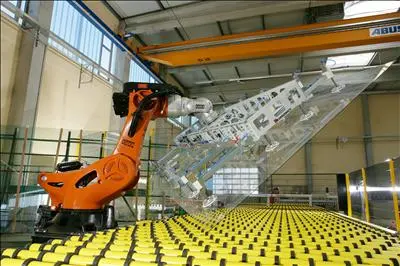
Compare real throughput, payload, reach, space, interaction and safeguarding—not the robot label alone.
Picking more than one product can improve rate, but increases tooling mass, reach demand and product-control requirements.
A shared robot may improve utilisation when buffering, line priority and pallet positions are engineered correctly.
Depalletising adds uncertainty from load shift, damaged packaging, separators and incomplete layers.
Final performance depends on the product, presentation, rate, layout and surrounding process.
A robotic palletising system picks products such as cases, trays, sacks, containers or boards and places them in a defined pattern on a pallet. The complete cell can include infeed conveyors, product orientation, pallet handling, slip sheets, guarding, controls and discharge.
Often, within a defined product family. Recipe-controlled patterns, adjustable guides, suitable grippers and verified product data can support changeover, but payload, stability and reach must be checked for every format.
Cobots may suit some lower-rate, lighter-load or flexible applications. Industrial robots can be better for higher speed, larger working envelopes, multi-line duties or heavier products. The choice follows the complete application and risk assessment.
Yes, when the incoming load is sufficiently predictable or can be located with sensing or vision. Layer condition, load shift, separators, product damage and the final difficult layer all need specific consideration.
Provide product dimensions and weights, permitted pickup faces, line rate, infeed height and direction, pallet type and height, required patterns, pallet change method, available layout, shift pattern and any stretch wrapping or labelling interfaces.
Presentation, pickup, movement and placement work best when they are designed as one production system.
Send product and pallet data, required patterns, line rate, infeed details, layout and a short process video. We will define the next engineering step.